
STEM subjects allow pupils to study the world and how it works. Our curriculum enables pupils to see science brought to life through practical work and demonstration.
We teach to ignite curiosity, inspire critical thinking and lead discovery, which embeds learning in a practical
and relatable way.
With hands-on projects and real world applications, pupils explore the connection between theory and reality, setting themselves up for success in further study and a wide range of careers.

Biology
The wonder of the natural world is made real through a dynamic programme of investigation, modelling and experimentation in and around our beautiful school estate. The children are encouraged to ask questions, then research to find and prove the answers through scientific studies and class presentations.
For example, pupils will take part in pond dipping to discover microscopic cells and their functions, or complete a mini film project to learn about digestion before asking questions about what creates a healthy lifestyle. During these KS3 years, the focus is to ignite a curiosity which can be explored further at GCSE level.

Chemistry
Pupils use modelling to represent what’s happening at a molecular level as they explore different chemical processes. Again, strong relevant links to real world examples help students appreciate the practical application of chemistry such as investigating the most effective indigestion tablet when learning about acids and alkalis.
In Year 8, classes will take a fossil hunting trip to Lyme Regis whilst learning about the rock cycle and a project titled “Do things really burn in space?” studies the impact of air volume on burning whilst teaching key scientific skills such as variables, safety and data analysis.

Physics
Lessons are hands-on and explorative as we introduce pupils to core concepts demonstrated through real life experiences. We’ll use cars, ramps, springs and even a parachute to discover different types of forces, investigate light through prisms and understand how we see by – for those brave enough! – dissecting an eye.
All students will create an ‘Explorer’s Guide’ as part of a big project on space, whilst setting up circuits to demonstrate ways in which electricity behaves. A particularly fun practical involves the burning of different types of food to explore the energy each offers the body.
Maths
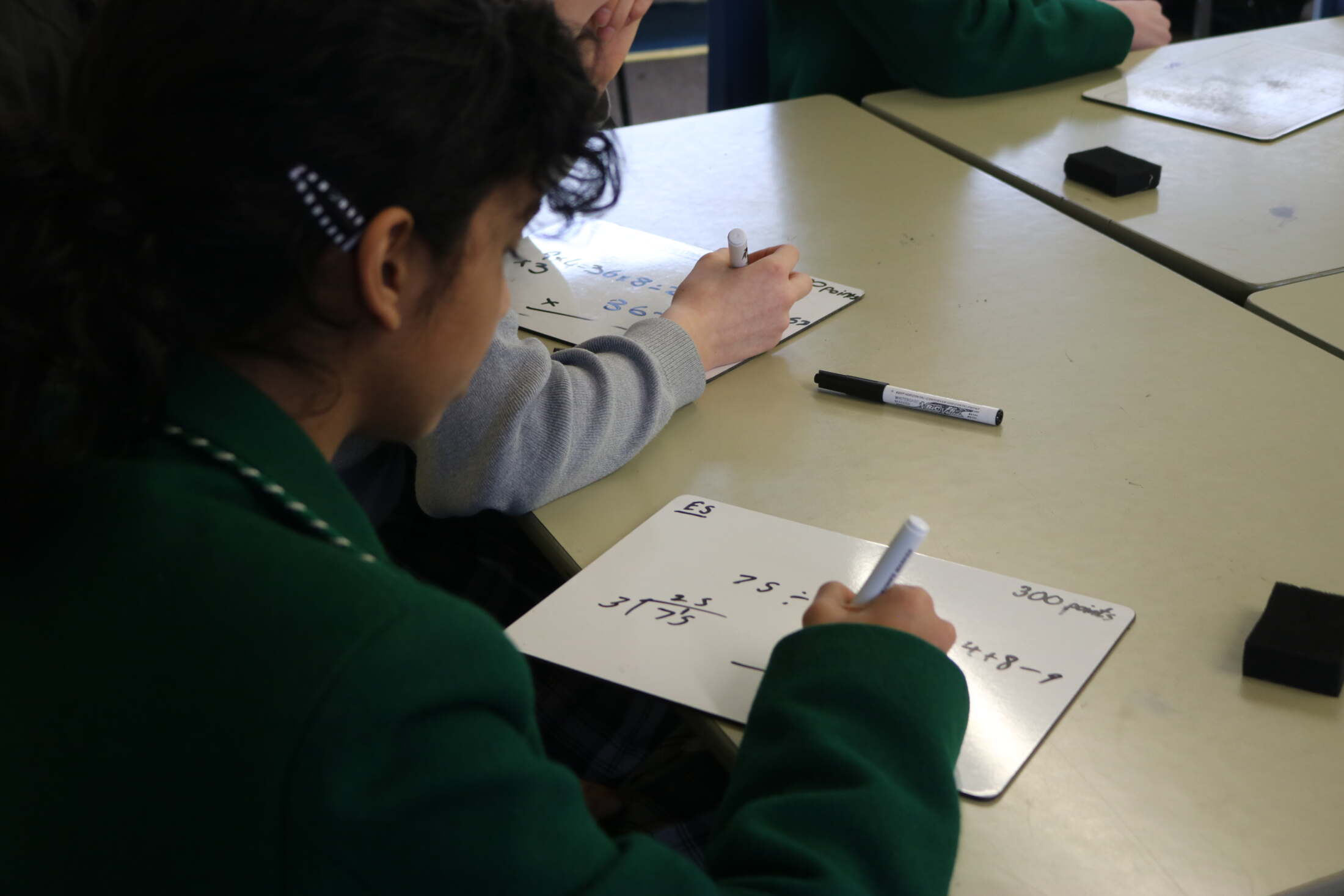
From the very start, pupils are encouraged to develop a mathematical mindset through curiosity, resourcefulness and resilience. In Year 7 the curriculum is skills-based, with a half termly theme, concluding with a presentation. These topics are fun, such as holiday planning on a budget, how to make a cup of tea or designing a board game – yet each incorporates many aspects of core maths skills.
This feeds into Year 8 where pupils follow the five key curriculum areas: Number, Algebra, Ratio & Proportion, Geometry and Probability & Statistics whilst in Year 9 students start preparing for their GCSE by exploring the key foundation topics. Maths is further woven through our enrichment programme in unique and different ways with pupils often unconsciously boosting their skills through chess, origami, engineering, rubik’s cube, sudoku and even building a racecar!
Computer Science
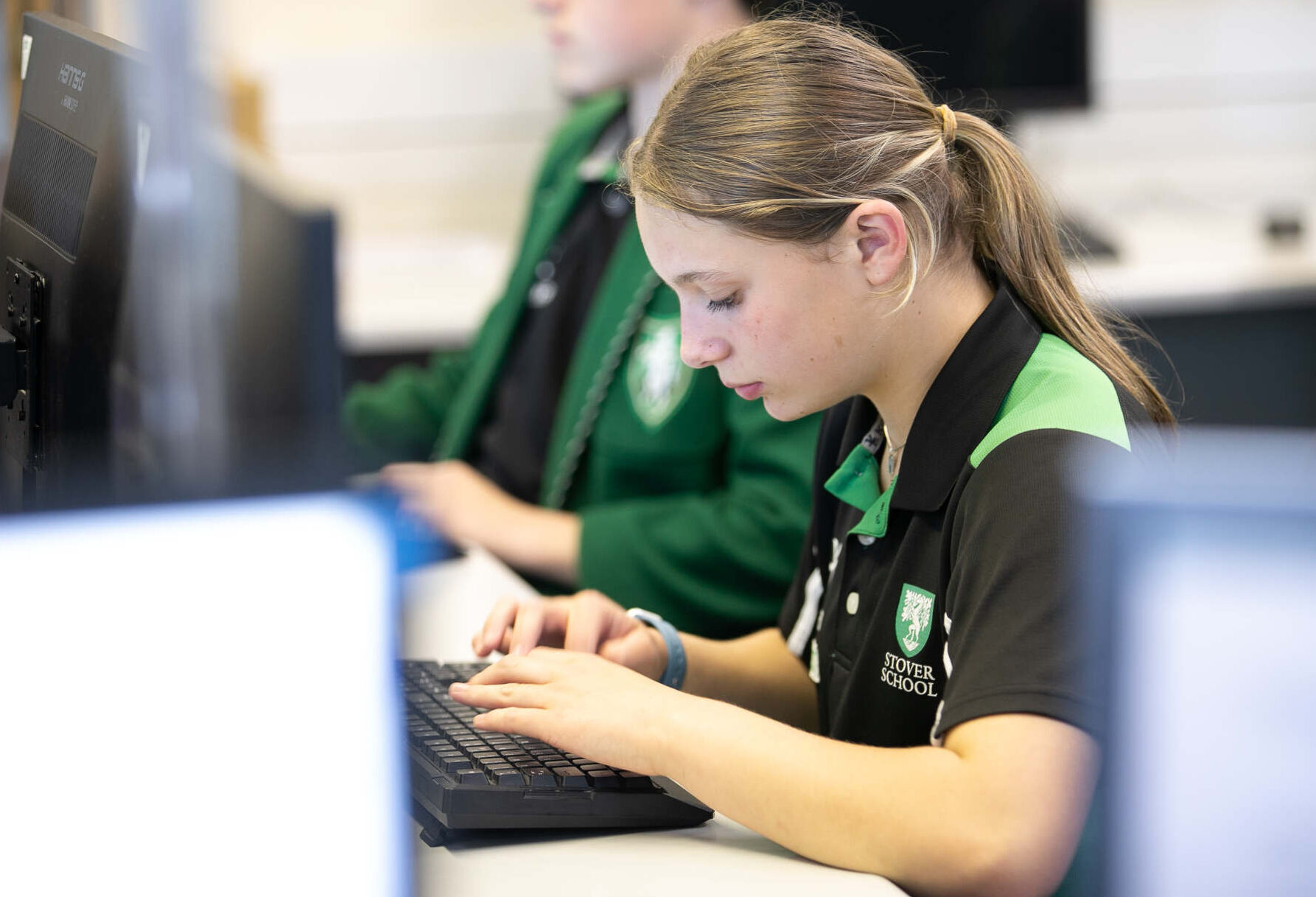
Pupils earn a strong foundation in IT knowledge throughout KS3, preparing them not only for onward study, but for life in a digital world. Study covers everything from how computers work to solving problems through code; ethics, law and cyber security to the impact of AI in the modern world. Programming Clubs provide opportunities to take part in the Young Coders Competition for Years 7&8 or the Perse Computing Challenge for older students.
In Year 9, all pupils take an Entry Level qualification in Computer Science, resulting in a certificate of achievement which represents a standard just below GCSE. This puts every Stover pupil into their exam preparation years already holding a nationally recognised qualification in a subject which will benefit every area of their future lives.

Food Technology and Nutrition
As an important life skill, pupils study food and improve their cookery skills throughout the first half of their senior school life, with a strong focus on practical learning. From the fundamentals of food hygiene to knife skills, meat safety and independent cooking, every student will learn how to prepare a variety of traditional and international cuisine.
Pupils may also take part in school trips to learn about food provenance, join baking or cupcake decorating clubs, embark on a four day cookery course during the summer term activity week or compete in Stover Bake-Off.

Design and Technology
Our Year 7 pupils benefit from an introduction to Design and Technology at South Devon UTC. Students are bussed to the technical college in Newton Abbot during school time to study the concept of product design, manufacture and production line management and develop fundamental tool handling skills.
The resources and facilities available here give our Year 7s opportunities to design using CAD programmes, create laser cut moulds and cast their designs in pewter – even making use of precision engineering machines. Later modules see students learning the basics of component production and developing leadership and teamwork skills to manage production lines.